
Biography
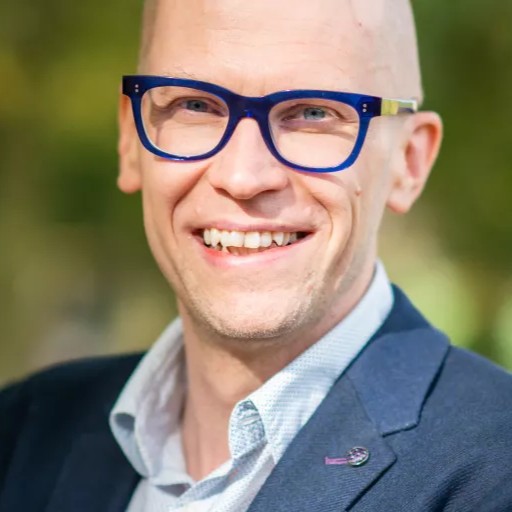
Kevin Verstrepen
Kevin Verstrepen is professor in Genetics and Genomics at Leuven University and Group Leader in Systems Biology at VIB (Flanders Institute for Biotechnology). He serves as the director of the VIB Center for Microbiology, director of the Leuven Institute for Beer Research, Guest Professor at Tianjin Institute for Industrial Biotechnology and as Honorary Professor at Nottingham University.
Verstrepen obtained a MSc and PhD in bio-engineering from KU Leuven. After serving as a postdoctoral fellow in the lab of Gerald Fink at M.I.T., he started leading a research team at Harvard University, which he transferred to KU Leuven and VIB in 2009. His team uses yeast cells as models to study eukaryotic genetics & genomics, while also exploiting molecular biotechnology tools to obtain superior microbial cell factories for use in food fermentations as well as production of biofuels, proteins, pharmaceuticals and bioplastics.
Keynote Details
Wednesday 1 July
Symposium 18: Sustainable food and feed alternatives
Yeast cells are arguably the most important industrial microbes, driving both traditional food fermentation as well as several applications in precision fermentation, such as the sustainable, green production of biofuels, insulin, vaccines and GLP-derived pharmaceuticals. However, the potential of precision fermentation to replace non-sustainable mass industry based on petrochemistry and animal husbandry is the cost. The market price of mass commodities such as fossil fuels, plastics and chemicals, as well as animal products like meat and dairy is often simply too low to make sustainable microbe-based processes economically viable. Our research therefore focuses on characterizing, comparing, understanding industrial yeasts, and using these insights to generate superior yeasts that grow on cheaper waste-derived substrates and produce higher titers, yields and productivity, thereby lowering the production cost and further improving the carbon and energy balance.
In this talk, I will summarize a few examples of how large-scale bioprospecting combined with massive breeding, engineering and newly developed molecular tools allowed us to identified lineages and alleles that drive industrially-relevant phenotypes and eventually develop new yeast variants that are showing superior industrial characteristics. Several of these newly developed yeasts have already been implemented at large scales in various industrial processes across the globe.