
Biography
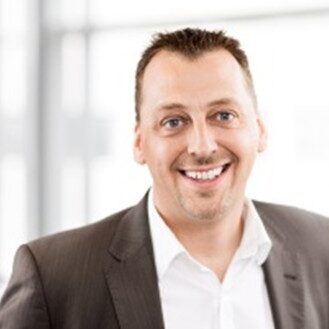
Claus Crone Fuglsang
Education:
Cand. scient Biochemistry, University of Copenhagen 1988-1993;
MBA, Heriot-Watt University, Edinburgh Business School, UK 1996-2000;
Completed various management and leadership courses at MIT, Boston and IMD, Lausanne
Novonesis (Novozymes A/S Krogshoejvej 36 2880 Bagsvaerd) is the worlds largest Biosolutions Company – Biosolutions in the form of enzymes, cultures, yeast and probiotics for use in industrial, agricultural, animal husbandry, food processing, food products and dietary supplements
Responsible for Novonesis global R&D organization with around 2000 employes and an annual budget of +400 MEUR. covering the basic research disciplines as well as the business anchored Applied Research.
Covering a broad area of research disciplines within advanced biotechnology research from discovery to development and scale up in pilot plants as well as regulatory affairs and product safety alongside our Intellectual Property and licensing activities as well as wide range of industry specific application research. Also, overseeing the data and digital innovation strategy incl. application of machine learning to drive innovation.
Author/co-author of 30+ publications and inventor/co-inventor on more than 20 patents and patent-applications.
Board Memberships:
Member of the Board of Directors in Microbiogen Ltd. Australia
Member of the Board of Directors 21st Bio, Denmark
Advisory Board Faculty of Bioengineering, Danish Technical University
Vice Chair of the ATV Guide committee
Plenary Details
Tuesday 30 June
On the frontier of industrial biotechnology innovation
Microbial biotechnology has been used in decades for the production of biopharmaceuticals, enzymes, vitamins, ethanol and more and the microbial biotechnology also finds its way into food as enablers of traditional or more advanced fermented food products. These biologically enabled solutions ie biosolutions comes with significant sustainability characteristics in being renewable and delivering benefits of process efficiency, productivity, chemical and energy reduction, lower waste and provide health benefits and are thus a key technology lever in the Green Transition and called out as one of EU’s 10 critical technologies. Still, biosolutions is faced with regulatory and systemic barriers that can prevent biosolutions from unfolding its full potential, which will need to be addressed. This, while the innovation potential within the field is taking place in an unprecedented pace helped by the advances of technology developments in the field – from ability to read and write DNA ever more efficient and cheaper, ability to engineer proteins, metabolic pathways and micro-organisms more effectively and predictively through novel gene editing technologies. Advanced analytics and screening technologies to both advance mechanistic understanding and develop solutions faster and with higher capacity. All, leading to larger and bigger datasets that via Machine Learning and AI can further accelerate innovation and even in cases disrupt the approach to innovation.