
Biography
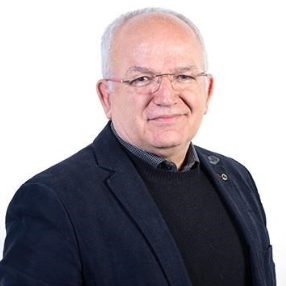
Arben Merkoci
Arben Merkoçi is an ICREA Research Professor and leader of the Nanobioelectronics and Biosensors Group at ICN2 in Barcelona, Spain. He obtained his PhD from the University of Tirana and carried out postdoctoral and research positions in Hungary, Greece, Italy, Spain, and the USA. His research focuses on integrating biological molecules with micro- and nanostructures to develop innovative biosensors. He is member European Academy of Sciences (EURASC), Institut d’Estudis Catalans (IEC), Academy of Sciences of Albania and director of NANOBALKAN, the regional nanoscience and nanotechnology network.
Prof. Merkoçi is Co-Editor-in-Chief of Biosensors and Bioelectronics and serves on the editorial boards of Electroanalysis, Microchimica Acta, and other journals. He has published over 350 articles (H-index: 97 Google Scholar) and supervised 40 PhD theses. He teaches and coordinates nanotechnology programmes at UAB and collaborates widely through national and international projects. He is also co-founder of the spin-off companies GraphenicaLab and PaperDrop.
Keynote Details
Wednesday 1 July
Symposium 17: Biosensors
Nanobiosensors for REASSURED Point-of-Care Diagnostics: From Sustainable Platforms to Real-World Applications
Nanobiosensors are emerging as powerful modern tools capable of addressing urgent diagnostic needs beyond traditional laboratory settings. Their integration into point-of-care (POC) formats aims to fulfil, as much as possible, the REASSURED criteria, ensuring devices that are Real-time, Easy to use, Affordable, Sensitive, Specific, User-friendly, Rapid, Equipment-free, and Deliverable, depending on the diagnostic scenario and whether the target concerns human health or environmental monitoring. In large-scale applications such as pandemics, contamination events, food-quality concerns, or safety and security emergencies, cost becomes a critical factor due to the need for massive testing.
Our work focuses on efficient, low-cost, biodegradable platforms combined with advanced nanomaterials and nanotechnologies to create sustainable, easy-to-use diagnostic solutions. I will present examples of optical and electrical detection strategies that can be interpreted with the naked eye or interfaced with smartphones, enabling accessible and decentralized analysis. Bioreceptors—antibodies, DNA sequences, and aptamers, constitute the essential selective elements that ensure reliable and specific detection.
The talk will highlight several application cases, including the detection of cancer cells, viruses, pathogens, and chemical pollutants. Together, these examples demonstrate how nanobiosensors are evolving into robust, affordable, and scalable tools capable of addressing global diagnostic challenges and supporting rapid decision-making in both clinical and environmental contexts.