
Biography
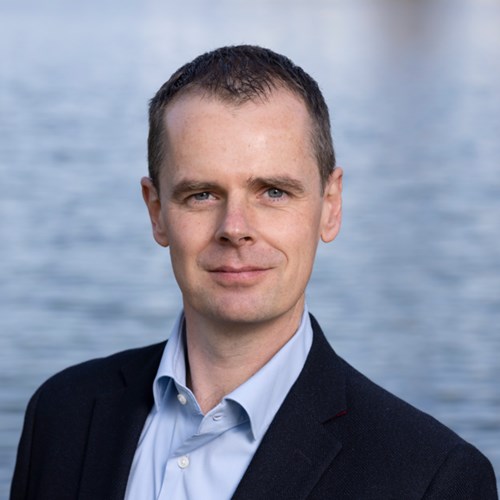
Nick Wierckx
- PhD and Postdoc in Delft, NL, at the Dutch research institute TNO.
- In 2011 I moved to the RWTH Aachen as research group leader at the Institute of Applied Microbiology.
- Since 2018 I lead the group of “Microbial Catalysis” in the Institute of Bio- and Geosciences of the Forschungszentrum Jülich
- With associated professorship at the Heinrich Heine University Düsseldorf
- Holder of ERC Consolidator Grant and previously a DFG Emmy Noether stipend
Keynote Details
Wednesday 1 July
Symposium 19: Bioprocess engineering, valorisation and upcycling
Closing cycles in the plastics bioeconomy with biotechnology
Over 400 million tons of plastic are produced worldwide every year. These materials make up a cornerstone of our modern way of life, but the environmental impact of primarily fossil-based plastics has been broadly discussed. We are facing a major crisis of plastic pollution with widespread impacts on the environment and human well-being. There is thus an urgent need for new recycling technologies that can cope with the ever-increasing complexity of plastic materials.
In this context, we see great potential in the bio-upcycling of plastic waste. To enable this, we have developed Pseudomonas into a plastic monomer-metabolizing biotechnological workhorse, capable of growing on a wide range of aliphatic diols, dicarboxylates, and amines. Currently our main focus is to develop these monomer-metabolizing strains to not just grow on plastic monomers, but to efficiently convert plastic hydrolysates into value-added chemicals and biopolymers.
Besides addressing the end-of-life of plastics, it is also important to address their beginning. Currently plastics are primarily fossil-based which ultimately causes climate change, petrochemical pollution, and a dependence on politically unstable countries with poor humanitarian records. We therefore also develop microbial catalysts for the bio-based production of chemicals, including plastic building blocks such as itaconic acid and 4-hydroxyphenylacetic acid. Both aspects will be discussed in the context of transitioning plastics into the circular bioeconomy.